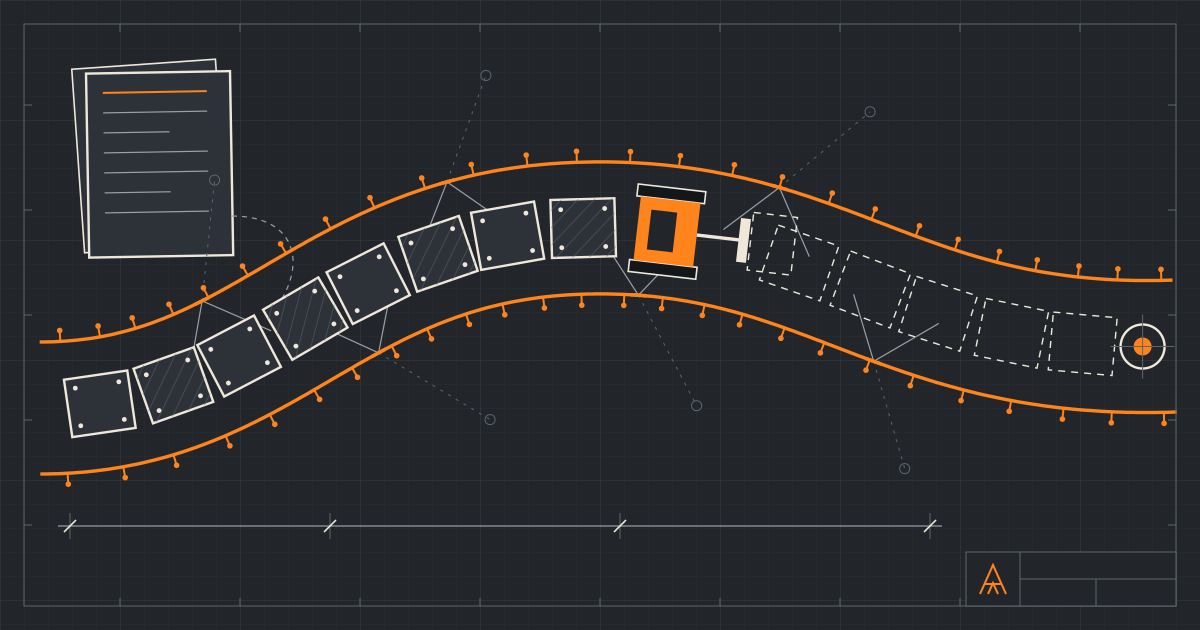
The Myth of the Magical Genie from the Cloud
If you look at some articles and YouTube videos, you might get the impression that “software engineering” is dead. We casually iterate on our code while our attention is actually on TikTok. Every few minutes, our friendly coding agent comes around the corner with a new iteration, which we briefly inspect and then send it back to work with a few half-baked instructions. Rinse and repeat until the workpiece is finished.
Even though we are, of course, heading towards such a scenario in the medium term: today (in mid-2025), this approach will at best give you a headache and the urge to incarnate and then strangle Gemini, Claude, or o3.
Lead Your AI Like an Excellent Outsourcing Team
The right mental model for cooperating with coding agents is not the “helpful genie” who magically fulfills all my wishes.
Instead, you have to think of the AI (yes, even Claude 4) more like an entire outsourcing team in a distant country that we have hired to support us.
They don’t know us. They have no idea what we do. There are cultural differences (invisible to both sides). And we have a high turnover of developers. Someone new is constantly joining the team and needs to be onboarded.
The people there are good. They are fast. And they are also cheap. But for outsourcing to work, you have to be disciplined. Complete specs. Clear requirements. Clear boundaries. Short iterations. Regular reviews. “Project management” becomes much more important than in a classic self-organized dev team.
And the same goes for Claude et al.
1. The Specification: Clarifying the ‘What’ and ‘Why’
Without a “big picture” and the context, the AI will make wrong design decisions.
Why? Because the AI needs context. A lot of context. While I, as a solo coder, have my “vision” in my head and basically anticipate the entire architecture mentally, therefore only needing to “translate it into lines of code,” the AI (of course) knows nothing about my mental image.
And therefore, it will implement things that I didn’t want. And then we iterate. And the code quality decreases with each iteration. And after an hour, my quick project idea has turned into a big mess, and we first have to refactor everything and throw out 1,000 comments and unused code. Yuck.
And after doing this 3–4 times, many probably come to the conclusion that AI-assisted coding, especially agentic coding, might be dramatically overhyped.
Far from it. This is (as so often in our profession) a Layer 8 problem.
We need a utility and usage specification for our tool. What do we want to achieve? Where should it be operated and how? This also applies to small tools.
2. The Design & the Plan: Setting the Guardrails
Based on the spec, the AI needs a design. A framework for the implementation. This is about non-functional requirements, but also decisions about the tech stack, frameworks, and implementation patterns (Functional vs. OO? REST vs. GraphQL vs. CQRS?).
Why? The AI’s context window is (still) limited. You have to be able to “ground” it regularly, otherwise you won’t notice that it no longer “sees” crucial information.
And now that we have the spec and the design, we need a plan, a roadmap, something that can be “worked through.” Depending on the project size, this can initially be broken down coarsely (features/epics) or finely (stories/tasks), but without a plan, the AI and the developer will eventually run in the wrong direction.
Only now, when we have the plan and have broken down the tasks into implementable steps, does the coding begin.
3. The Implementation. Playful. But Attentive.
“The fight is won or lost far away from witnesses—behind the lines, in the gym, and out there on the road, long before I dance under those lights.” (Ali)
And now Claude (or Gemini or whoever) can show what it can do. Through the preparatory work, we minimize the iterations and thus the proliferation of “correction attempts” by the AI. Anyone who works with these things a lot knows what I mean. If a bug fix hasn’t worked after the third or fourth attempt, you can revert all changes in 90 percent of cases because the code simply becomes weird.
But even in the iterations, a relatively “tight guidance” is still needed. 90% of the code is good. The better the specs and stories, the better. But if the AI goes off track, you have to intervene immediately. Otherwise, islands of code that are simply bad will emerge.
Conclusion: “Vibe” is possible, but it doesn’t come for free.
My conclusion: A “vibe coder” must work even more disciplined and structured than a classic solo dev if the project goes even slightly beyond the gadzillionth iteration of “write me a Snake game in Python.”
Context is king. Guardrails are important. But then it’s just fun, and the “vibe” becomes a “flow” and doesn’t end in deep frustration after 60 minutes.
Where do you currently stand on the topic of AI coding? “I’m sitting this one out. It’s overhyped,” “Well. Maybe in 2 years,” “My life has never been better than it is today,” or even “We’ll all be unemployed in 6 months?”
I always appreciate critical comments and different perspectives. But if you must, you can also agree :)
First published on 2 July 2025 on Substack. Original on Substack